ANSI/NETA EMW-2026 matters because it helps answer an important question in electrical maintenance:
Who is actually qualified to do the work?
A company can have a maintenance plan on paper, but that does not automatically mean the work is being done by people with the right training and experience. EMW-2026 helps fix that problem.
This standard focuses on the minimum knowledge, training, skills, and experience needed for workers who perform basic electrical maintenance. It also connects closely to NFPA 70B, which has become more important in how companies manage electrical maintenance.
In simple terms, NFPA 70B explains that maintenance needs to be done, and EMW-2026 helps explain what kind of worker should be doing it.
Why NFPA 70B Changed Things
In the past, many companies handled maintenance in different ways. Some had strong programs with clear steps. Others relied more on habit, experience, or “the way we have always done it.”
That meant the quality of maintenance could vary a lot from one place to another.
EMW-2026 was created to help bring more consistency to the industry. In its foreword, the standard explains that it was developed to set a common baseline for the knowledge, skills, and abilities needed to safely perform basic electrical maintenance tasks. It also ties this need to NFPA 70B, which the document describes as moving from a recommended practice to an enforceable standard.
That is a big shift.
It means electrical maintenance is being treated more seriously. It also means companies need qualified workers who can carry out maintenance in a safe and proper way.
EMW-2026 Supports the Worker Side of Compliance
NFPA 70B is about keeping electrical equipment safe, reliable, and ready to work. But even the best maintenance standard only works if the person doing the job understands what they are doing.
That is where EMW-2026 helps.
The standard says it covers qualifications for workers who support condition-based maintenance, preventive maintenance, and predictive maintenance on electrical power equipment. It sets requirements for education, training, experience, and proven ability in maintenance procedures and electrical safety.
It is meant to help building owners, service companies, and authorities identify workers who are qualified to perform basic maintenance work in line with NFPA 70B, NFPA 70E, and other industry standards.
So, EMW-2026 does not replace NFPA 70B. Instead, it supports it by helping make sure the worker has the right background to perform the maintenance.
It Defines What an Electrical Maintenance Worker Does
One of the most helpful parts of EMW-2026 is that it gives a clearer picture of the Electrical Maintenance Worker, or EMW.
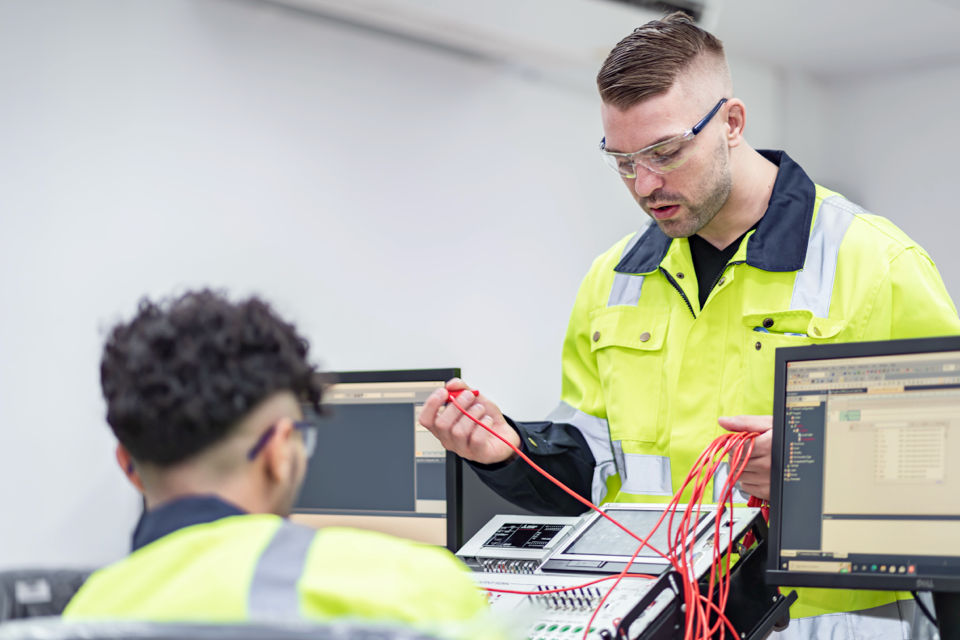
The standard describes this worker as someone who handles assigned tasks related to inspecting, maintaining, and servicing electrical equipment and systems. It says this role is important for keeping power systems safe, reliable, and working properly.
The standard lists tasks such as:
- visual and mechanical inspections
- preventive and predictive maintenance
- functional testing and operational checks
- documenting findings and reporting results
- spotting hazards and supporting safety
- helping with troubleshooting and diagnostics
- following standards and procedures
These are the same kinds of duties that matter in an NFPA 70B maintenance program.
Compliance is not just about having a checklist. It depends on workers who can notice damaged parts, follow procedures, work safely, and record what they find.
It Sets Minimum Requirements
Another way EMW-2026 helps is by setting clear minimum requirements.
To qualify, a candidate must have:
- a high school diploma or equivalent
- 100 hours of related technical training as part of an electrical apprenticeship program
- one year of field experience
- 8 hours of NFPA 70E electrical safety training within the last three years
This matters because it gives employers something measurable.
Instead of saying a worker has “been around electrical work for a while,” the standard requires a mix of school-level education, formal technical training, real field experience, and current safety training.
That makes it easier for companies to show that workers are prepared for maintenance duties.
It Puts Strong Focus on Safety
Electrical maintenance is not just about equipment. It is also about working safely around hazards.
That is why EMW-2026 places strong attention on safety topics connected to NFPA 70E.
Its content outline includes things like:
- creating a safe work environment
- identifying shock and arc-flash boundaries
- reading labels and recognizing equipment condition
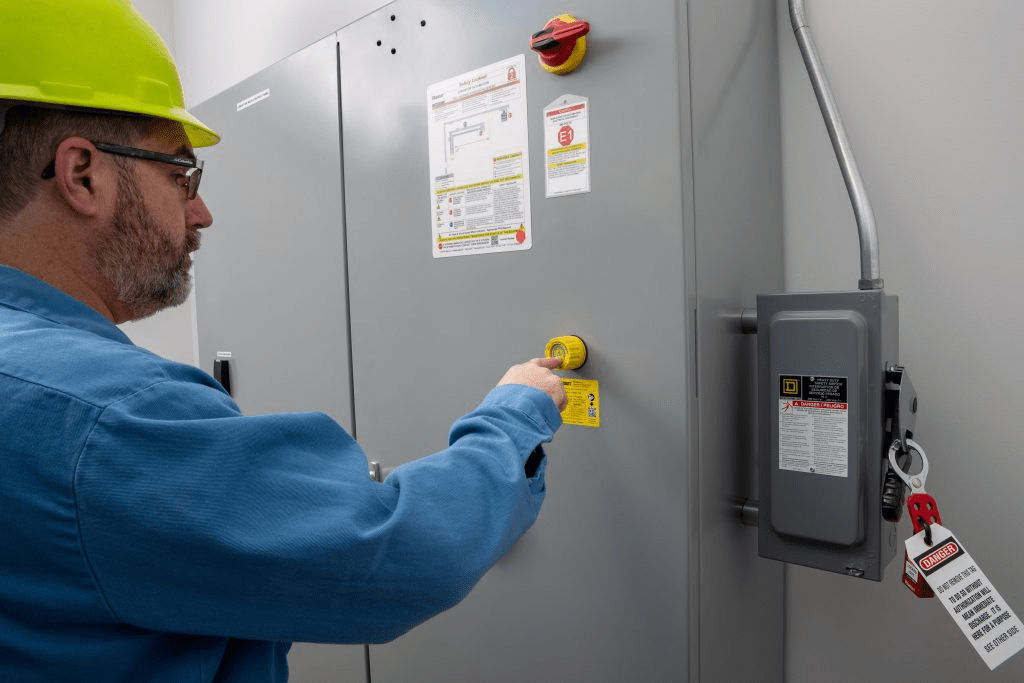
- establishing an electrically safe work condition
- isolation, switching, lockout/tagout, and temporary protective grounding
- proper use, storage, and inspection of PPE
- understanding incident energy labels and shock hazard labels
- knowing how distance, current, and time affect arc-flash danger
This is one of the clearest ways EMW-2026 supports NFPA 70B compliance.
Maintenance cannot be called successful if it is done unsafely. A qualified maintenance worker needs to understand both the equipment and the safety rules that protect people working on or near it.
It Helps Make Maintenance More Consistent
One common problem in maintenance programs is inconsistency. Two workers may perform the same task very differently based on their habits, background, or training.
EMW-2026 helps reduce that problem by setting a common baseline across many types of equipment.
The standard includes equipment such as:
- transformers
- switchgear
- switchboards
- panelboards
- cables
- busways
- circuit breakers
- switches
- grounding systems
- ground-fault protection
- rotating equipment
- motor control equipment
- batteries and chargers
Across these areas, the standard keeps coming back to the same basic expectations: inspect the equipment, clean it correctly, perform mechanical service tasks, do basic electrical tests when needed, and review the results when needed.
That kind of repeated pattern helps companies train workers in a more organized way and makes maintenance easier to perform the same way each time.
It Requires Documentation and Verification
Doing the work is only part of compliance. A company also needs to show that the work was done by qualified people.
EMW-2026 supports this in a few ways.
The standard says the employer is responsible for confirming that the worker has the needed knowledge, skills, and abilities. At the same time, it says examinations must be prepared and given by a certifying body described in the standard.
This creates two parts:
First, the employer checks the worker’s real-world background.
Second, the formal qualification process is handled through a structured outside system.
Appendix A also includes an employer verification form. This form confirms that the worker has at least:
- one year of related field experience
- 8 hours of safety training
- 100 hours of related training
The standard also makes an important point: on-the-job experience does not count as formal training.
That matters because informal experience can be hard to prove. Documented training and verified experience are much easier to defend during audits, reviews, or compliance checks.
It Supports Third-Party Certification
Another important part of EMW-2026 is that it supports independent third-party qualification.
The standard says self-certification does not meet its requirements. It explains that a company certifying its own workers has a financial interest in the outcome, so it does not offer the same level of independence and objectivity as a third-party system.
This adds credibility.
If an employer, inspector, insurer, or authority having jurisdiction asks whether a worker is qualified, an outside certification process usually carries more weight than an internal company label.
That helps make a maintenance program more credible and easier to defend.
It Requires Requalification
EMW-2026 does not treat qualification as a one-time event.
The standard says the qualification period cannot be longer than three years. It also requires the certifying body to have a requalification process through continued technical development, re-examination, or both.
Table 1 also lists requalification tied to both NFPA 70B and NFPA 70E. It includes:
- 9 hours of NFPA 70B
- 3 hours of NFPA 70E
This is important because maintenance work changes over time. Safety knowledge can fade. Standards can be updated. Workers need a way to stay current.
Requalification helps make sure workers continue to meet the standard instead of relying on old training from years ago.
What This Means for Employers
For employers, EMW-2026 provides a practical way to strengthen the people side of maintenance compliance.
It can help with:
- setting hiring standards
- building apprenticeship and training paths
- checking whether workers are ready for field work
- improving records and documentation
- supporting a stronger maintenance program
It also gives employers a better way to explain why certain tasks should only be done by properly trained workers.
NFPA 70B expects maintenance to be done correctly. EMW-2026 helps employers show that the workers doing that maintenance have the right preparation.
What This Means for Technicians
For technicians, EMW-2026 can be seen as a career path as well as a standard.
It helps show what an electrical maintenance worker is expected to know. That includes safety knowledge, inspection skills, basic maintenance ability, and formal training.
As NFPA 70B becomes more important, workers with documented qualifications may have a stronger position than workers who rely only on informal experience.
In other words, EMW-2026 gives technicians a clearer target for professional growth.
Final Thoughts
EMW-2026 supports NFPA 70B compliance by focusing on something that is easy to overlook: the qualification of the worker.
NFPA 70B raises expectations for electrical maintenance. EMW-2026 helps raise expectations for the people doing that maintenance.
It does this by:
- defining the electrical maintenance worker role
- setting minimum education, training, and experience requirements
- stressing safety knowledge
- requiring documentation
- supporting third-party certification
- requiring requalification over time
That makes EMW-2026 more than just a certification standard. It gives companies a framework for building safer, more consistent, and better documented maintenance programs.
For anyone involved in electrical maintenance, that is worth paying attention to.