Join the community

Expand your knowledge

NFPA 70E for Electrical Maintenance Workers
[Unofficial]

NFPA 70E for Electrical Maintenance Workers

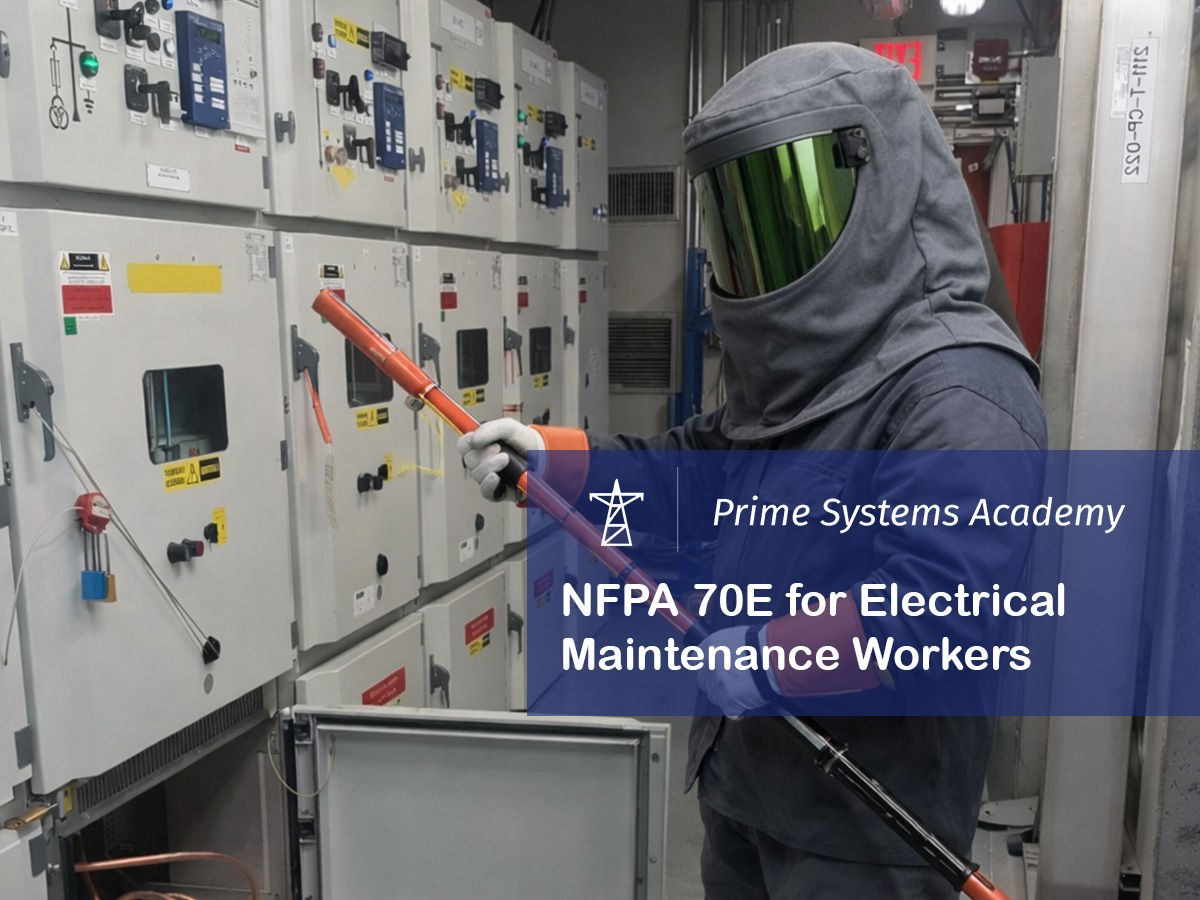
Technician in arc flash suit inspecting electrical panel

Instructor

Bill Monroe

NFPA 70E for Electrical Maintenance Workers

Skill: Beginner

Last Update: March 16, 2026

Lessons: 63
Progress 0%

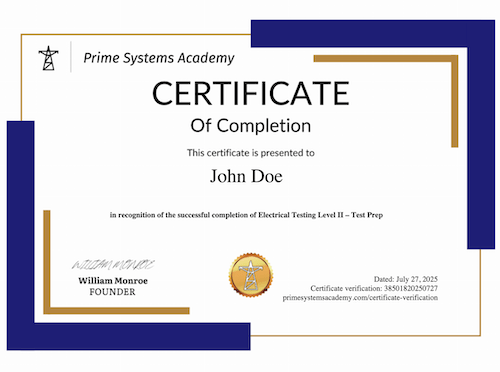
Certificate of completion for Electrical Testing course.
Get Certificate

Course Overview

This course is designed to give electrical workers, maintenance personnel, and technicians a practical understanding of NFPA 70E and how it applies in real work environments. It focuses on the core safety concepts needed to recognize electrical hazards, reduce risk, and work more safely around energized equipment and electrical systems.

The course is built for people who need more than definitions. It breaks down the standard into practical lessons that help students understand shock hazards, arc-flash hazards, risk assessment, electrically safe work conditions, PPE, boundaries, labeling, and job planning. The goal is to help learners build a safety foundation they can apply in the field, not just memorize terms.

Key Learning Objectives:

  • NFPA 70E Fundamentals: Understand the purpose, scope, and structure of NFPA 70E and how it supports workplace electrical safety.
  • Hazard Recognition: Learn how to identify common electrical hazards, including shock and arc-flash risks, in maintenance and testing environments.
  • Risk Assessment: Understand how to evaluate tasks, recognize exposure, and apply safer decision-making before work begins.
  • Shock and Arc-Flash Boundaries: Learn the meaning and use of shock protection boundaries and the arc-flash boundary.
  • Electrically Safe Work Condition: Understand the process for establishing an electrically safe work condition, including isolation, lockout/tagout, and verification.
  • PPE and Safety Equipment: Learn the role of arc-rated clothing, rubber insulating gloves, face protection, and other safety equipment, including basic use and inspection.
  • Labels and Safety Information: Understand how to read and apply incident energy labels, shock hazard information, and other warning markings.
  • Job Planning and Safe Work Practices: Learn how job planning, communication, and proper procedures support safer electrical work.

NFPA® is a registered trademark of the National Fire Protection Association. Prime Systems Academy is not affiliated with or endorsed by NFPA. This course is intended to provide educational training based on publicly available industry standards and workplace safety concepts.

What You'll Learn?

Practical NFPA 70E safety training

Shock and arc-flash hazard basics

Risk assessment and safe decisions

Electrically safe work condition steps

PPE and safety equipment basics

Label reading and boundary awareness

Who's this for?

Electrical maintenance workers

Testing and field service technicians

Apprentices and entry-level workers

Facility maintenance personnel

Supervisors supporting electrical safety

Workers needing NFPA 70E training

Lessons

> What is NFPA 70E?
> Purpose of the standard
> Who it applies to in the workplace
> Relationship to employers, employees, and electrical work
> Difference between electrical safety rules and purely technical maintenance/testing procedures
> How NFPA 70E connects to EMW and modern maintenance expectations
> Overview of electrical hazards
> Shock hazard basics
> Arc-flash hazard basics
> Recognizing exposure during inspection, operation, testing, and maintenance
> Difference between hazard and risk
> Basic risk assessment thinking before starting work
> Human factors and error awareness
> Why normal operation is not always automatically safe
> Shock protection approach boundaries
> Limited approach boundary
> Restricted approach boundary
> Arc-flash boundary
> Why boundaries matter in the field
> How worker position, task, and exposure change the safety decision
> Relationship between distance and hazard severity
> Reading and applying posted labels and warning information
> What an electrically safe work condition means
> Disconnecting from all possible energy sources
> Proper isolation and switching
> Lockout/tagout basics
> Release of stored electrical energy
> Verification of absence of voltage
> When temporary protective grounding may be needed
> Why this process must happen in order
> Common mistakes in the field
> What PPE is for
> Arc-rated clothing basics
> Shock protection PPE basics
> Gloves, face protection, head protection, hearing protection, and eye protection overview
> Correct use, storage, care, and routine inspection of PPE
> Correct use and inspection of safety equipment
> Limits of PPE
> Why PPE is not the first control
> What incident energy means at a basic level
> How current, time, and distance affect arc-flash severity
> Shock-hazard and incident-energy labels
> How to interpret labels in a practical way
> Why label data must be current and valid
> Recognizing condition-of-maintenance concerns from visual inspection
> Why poorly maintained equipment can increase risk
> When to stop and escalate concerns
> Why job planning matters
> Basic job safety planning
> Job briefing essentials
> Matching the task to the hazard
> When energized work is not justified
> When to stop and ask questions
> Using procedures, standards, and manufacturer instructions
> Communication between crew members
> Panelboards and switchboards
> Switchgear and disconnects
> Motor control equipment
> Breakers and fuses
> Batteries and battery rooms
> Portable electric tools and equipment
> Using NFPA 70E thinking during inspection, cleaning, testing support, and basic servicing
> Recognizing when a task exceeds worker qualification or requires a different level of control

NFPA 70E for Electrical Maintenance Workers

Skill: Beginner

Release Date: Coming 2026

Lessons: 63

Certificate of completion for Electrical Testing course.
Get Certificate

Confirm your name below. This is how it will appear on your certificate.

Explore our other courses

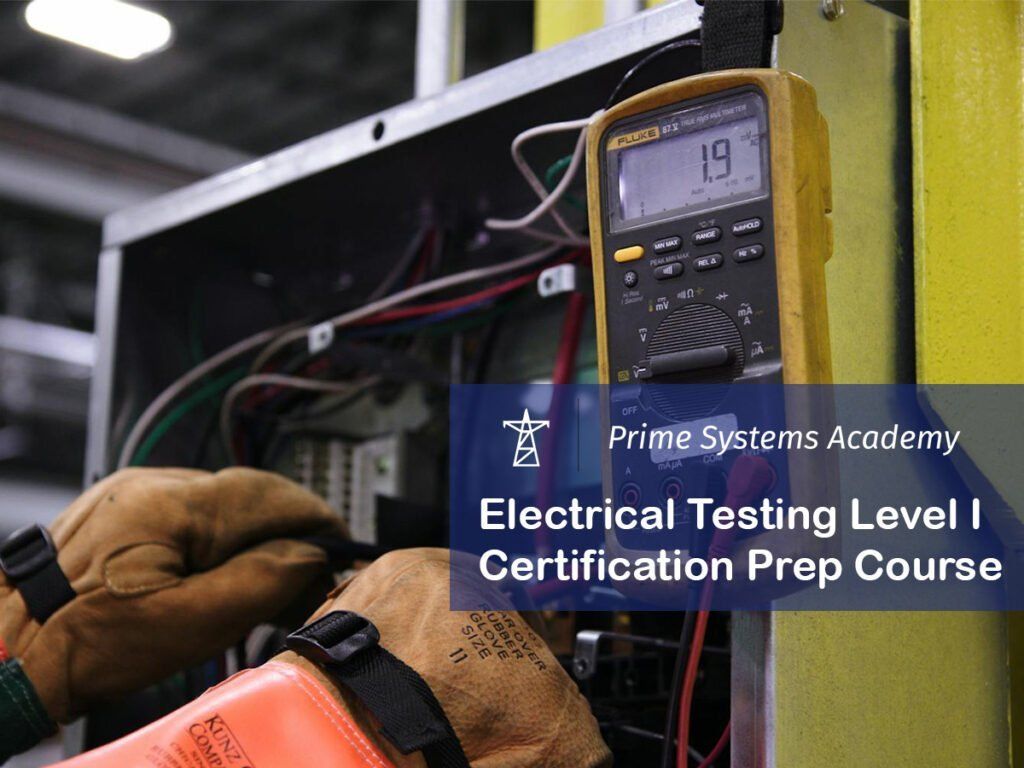
Electrical testing certification course advertisement

Course

[Unofficial]

NICET Electrical Testing Level I Test Prep

View the Course
Technician preparing for electrical testing certification course.

Course

[Unofficial]

NICET Electrical Testing Level II Test Prep

View the Course
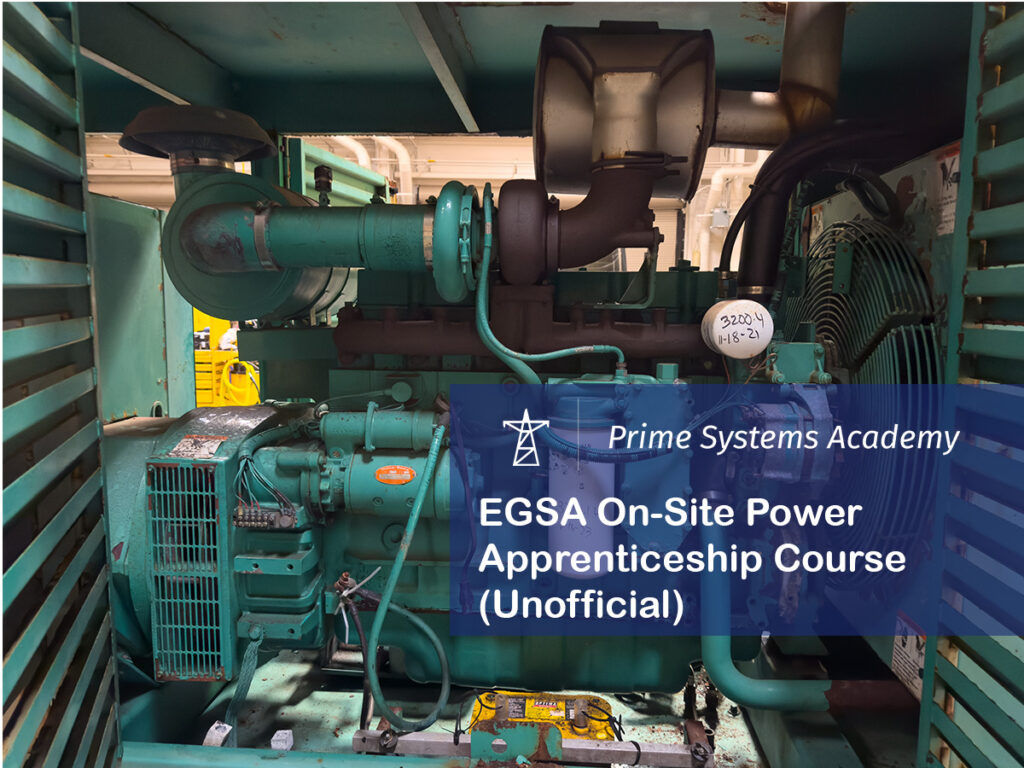
Power generation equipment at Prime Systems Academy course

Course

[Unofficial]

EGSA On-Site Power Apprenticeship Course

Coming 2026

Coming Soon
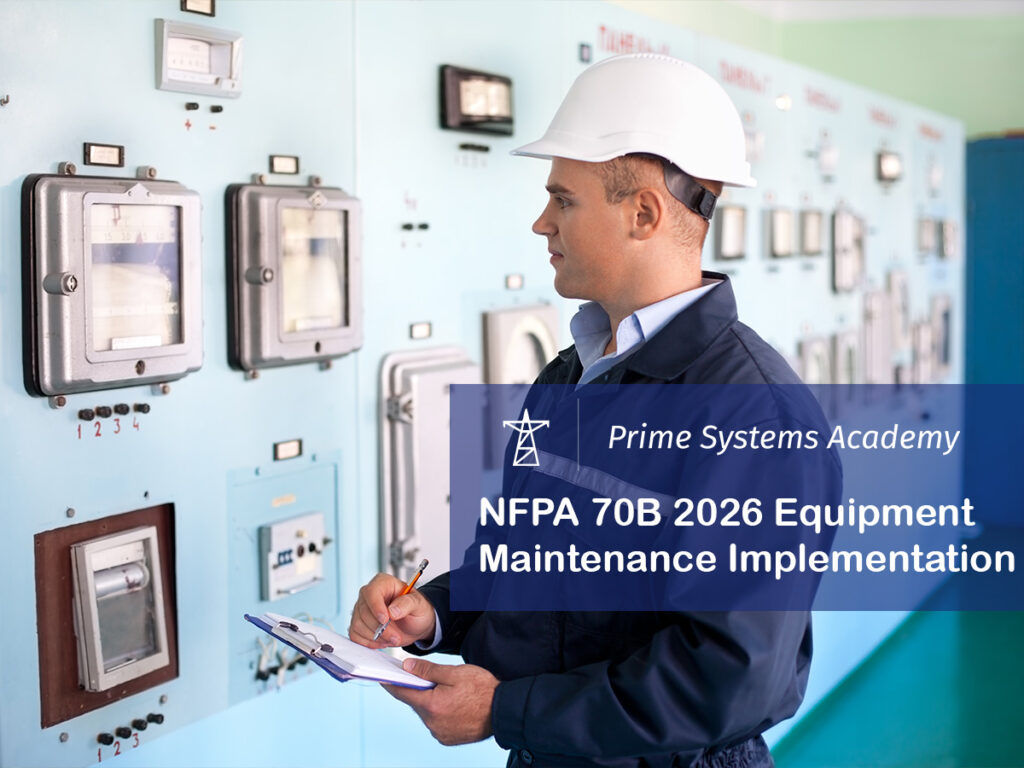
Technician inspecting electrical control panels with clipboard

Course

[Unofficial]

NFPA 70B 2026 Equipment Maintenance Implementation

Coming 2026

Progress 0%

Coming Soon
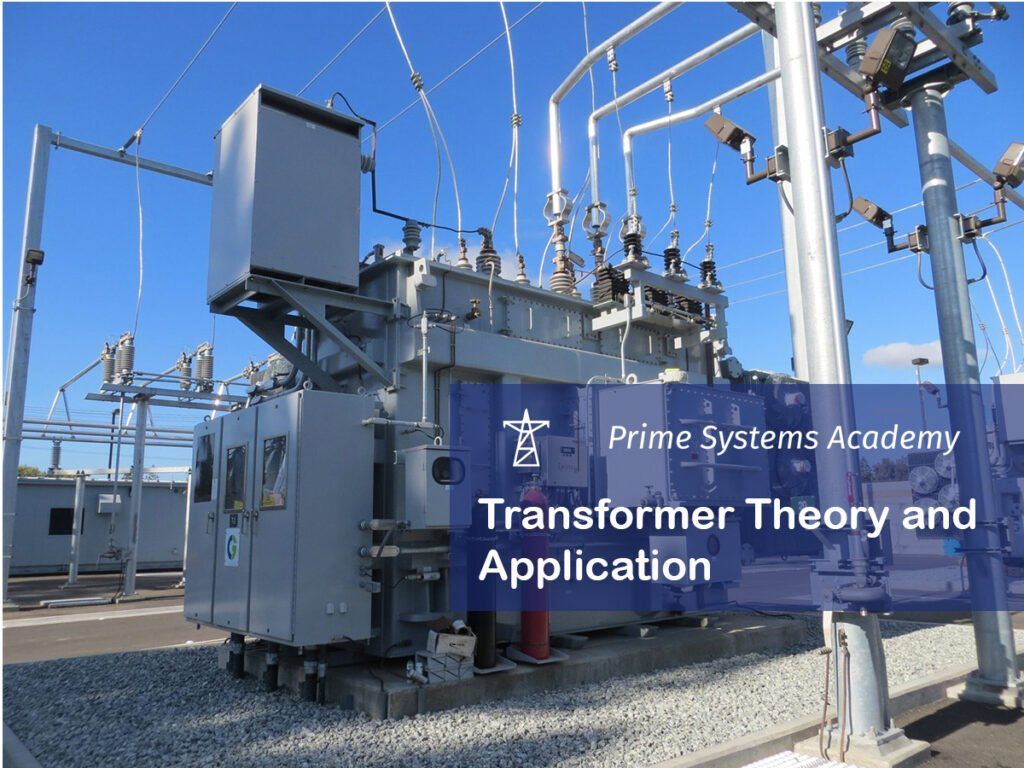
Electrical transformer with power lines.

Course

Transformer Theory and Application

Coming 2026

Coming Soon