Join the community

Expand your knowledge

NFPA 70B 2026 Equipment Maintenance Implementation
[Unofficial]

NFPA 70B 2026 Equipment Maintenance Implementation

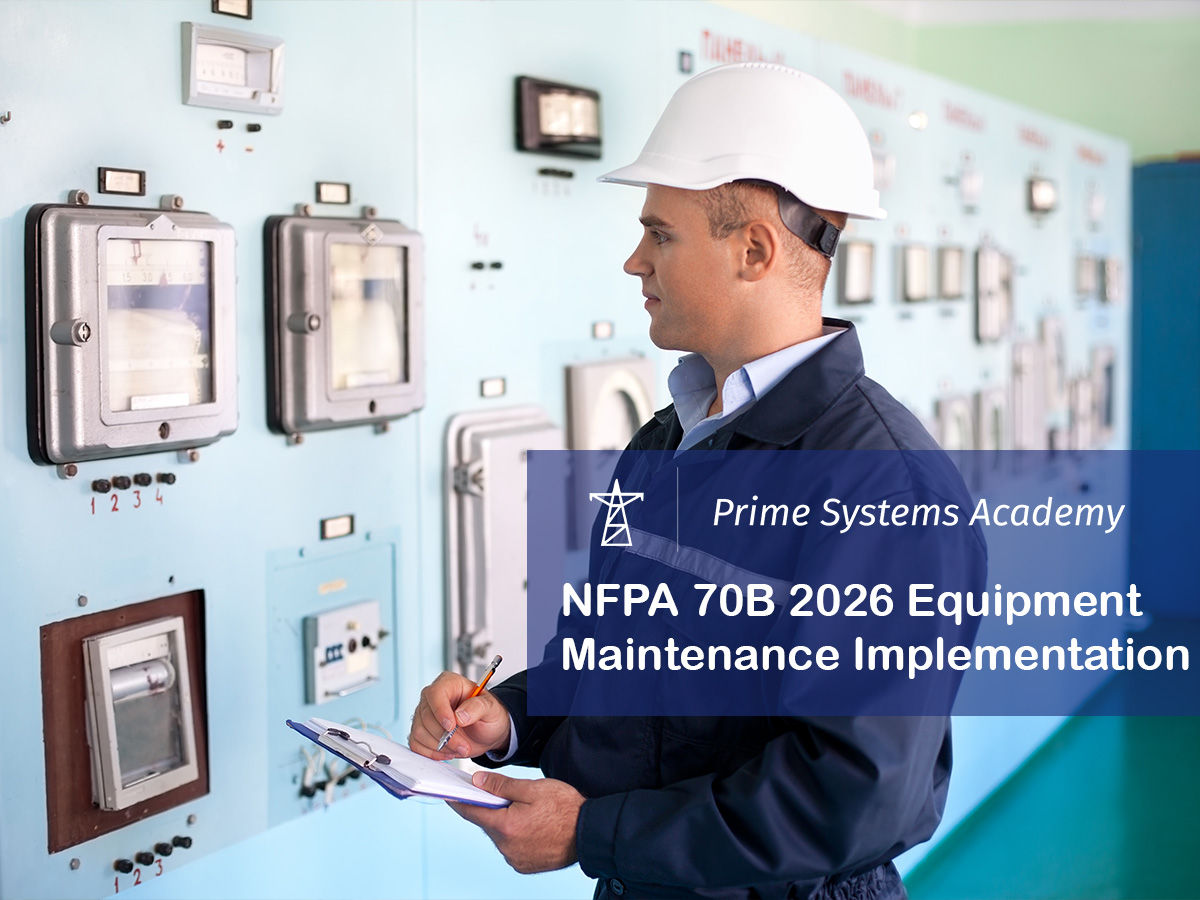
Technician inspecting electrical control panels with clipboard

Instructor

Bill Monroe

NFPA 70B 2026 Equipment Maintenance Implementation

Skill: Beginner

Last Update: March 16, 2026

Lessons: 117
Progress 0%

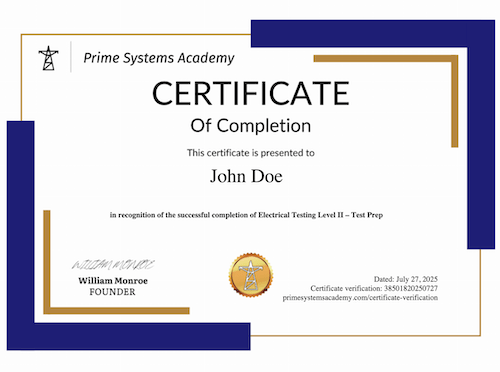
Certificate of completion for Electrical Testing course.
Get Certificate

Course Overview

This course is designed to help technicians, maintenance personnel, and facility professionals understand and apply the practical maintenance concepts found in NFPA 70B. It provides structured training on electrical equipment maintenance, maintenance program development, inspection priorities, safety considerations, and implementation strategies that support safer and more reliable power systems.

The curriculum focuses on turning NFPA 70B from a reference document into something usable in the real world. Instead of only reviewing theory, this course emphasizes how to understand maintenance requirements, organize a maintenance program, recognize equipment condition concerns, and apply maintenance best practices across common electrical equipment.

Key Learning Objectives:

  • NFPA 70B Fundamentals: Understand the purpose, scope, and structure of NFPA 70B and how it applies to electrical equipment maintenance programs.
  • Maintenance Program Development: Learn how to build, organize, and support an electrical maintenance program using risk-based and condition-based concepts.
  • Equipment Maintenance Practices: Explore practical maintenance expectations for common electrical equipment such as switchgear, switchboards, panelboards, transformers, circuit breakers, cables, grounding systems, batteries, and rotating equipment.
  • Inspection and Condition Assessment: Learn how to identify signs of deterioration, poor condition, improper maintenance, and other issues that may affect safety and reliability.
  • Documentation and Implementation: Understand how to organize records, maintenance intervals, equipment inventories, and baseline condition assessments to support a defensible maintenance program.
  • Safety and Reliability Considerations: Recognize how maintenance quality affects worker safety, equipment performance, and long-term system reliability.

NFPA® is a registered trademark of the National Fire Protection Association. Prime Systems Academy is not affiliated with or endorsed by NFPA. This course is intended to provide educational training based on publicly available industry standards and maintenance concepts.

What You'll Learn?

Practical NFPA 70B maintenance training

How to organize a maintenance program

Equipment-focused maintenance lessons

Easier-to-understand maintenance guidance

Flexible online learning at your pace

Training for real-world maintenance work

Who's this for?

Electrical maintenance technicians

Facility and plant maintenance personnel

Field service and testing professionals

Supervisors building or improving electrical maintenance programs

Lessons

> What NFPA 70B is and what problem it solves
> Why electrical maintenance matters (reliability and safety)
> Who NFPA 70B applies to (facility and contractor perspective)
> What systems and equipment are covered
> What NFPA 70B does not replace (manufacturer instructions and other standards)
> Why NFPA 70B changed from recommended practice to standard
> What changed in the 2026 edition (high-level overview)
> How NFPA standards are structured (chapters, annexes, referenced publications)
> Program chapters versus equipment chapters
> Annexes what they are and how to use them
> How to navigate NFPA 70B during real work (quick lookup workflow)
> Why defined terms matter in standards-based work
> Terms technicians actually see (maintenance interval, condition of maintenance, inspection, servicing, testing, corrective action)
> Authority Having Jurisdiction (AHJ), listed, labeled, and documentation language
> Translating definitions into field actions (what you must do differently)
> EMP overview and minimum components
> Personnel roles and responsibilities (who owns what)
> Survey and analysis: inventory and baseline assessment
> Planned inspections and scheduled maintenance
> Acceptance test reports and what to keep
> Handling additions, rework, and retrofits
> Cleaning and environmental control as maintenance
> Documentation structure (folders, naming, versioning, evidence)
> Personnel safety expectations inside NFPA 70B
> Relationship between NFPA 70B and NFPA 70E
> Pre-task planning and hazard recognition for maintenance
> De-energized versus energized considerations (maintenance reality)
> Communication and documentation before work begins
> Why single-line diagrams matter for maintenance
> Short-circuit study basics (what it impacts)
> Coordination study basics (why settings matter)
> Load-flow and reliability study basics
> Arc-flash and incident energy study basics (why it must stay current)
> What maintenance changes should trigger study review
> What “fundamental tests” are and why they exist
> Bolted connections, terminations, and connectors (what good looks like)
> Insulation resistance basics (what it can and cannot tell you)
> Infrared thermography basics (what findings mean)
> Common mistakes in basic testing (false confidence and bad records)
> Field testing overview and documentation expectations
> Risk assessment special considerations (when it changes decisions)
> Test category types and selecting methods
> Test equipment basics and recordkeeping
> Condition of maintenance and what “readily available” means
> Serviceable, limited service, nonserviceable classifications
> Turning test results into corrective action
> Why maintenance intervals matter (risk and reliability)
> Predictive maintenance and continuous monitoring concepts
> P-F curve concept and how it affects maximum intervals
> Modifying maintenance frequency using maintenance history
> Equipment condition assessment overview
> Physical condition factors
> Criticality condition factors
> Operating environment condition factors
> Repair timelines and corrective action scheduling
> Hazardous (classified) locations and what changes for maintenance
> Eliminating hazardous atmospheres and ignition sources
> Hardware, seals, reassembly, and handling (what is commonly missed)
> Field modifications and why they create risk
> How environment drives maintenance frequency and documentation
> Understanding scope, frequency, and periodic procedures
> Visual inspection pattern (what to look for)
> Cleaning and environmental maintenance pattern
> Mechanical servicing pattern
> Electrical testing pattern
> Special procedures and documentation triggers
> Turning the pattern into checklists and work orders
> Power and distribution transformers (maintenance concepts and documentation)
> Substations and switchgear (inspection priorities and records)
> Panelboards, switchboards, and busways
> Circuit breakers (common maintenance actions and testing)
> Fuses and switches (what good documentation looks like)
> Power cables and terminations (maintenance and records)
> Cable tray systems (inspection and environment)
> Grounding and bonding (why it affects safety and reliability)
> Ground-fault systems (GFCI and GFPE) maintenance concepts
> Lighting and wiring devices (facility realities)
> UPS systems (maintenance expectations and documentation)
> Rotating equipment and motors (maintenance and testing overview)
> Motor control equipment (MCC concepts and inspection)
> Portable electrical tools and equipment (program control)
> Protective relays (maintenance records and verification)
> Transfer switches (new emphasis for 2026) and why they matter
> PV systems maintenance and documentation concepts
> Wind power electrical systems overview
> Battery energy storage systems (BESS) overview
> EV power transfer systems (EVSE) overview
> Documentation and labeling expectations for these systems
> Battery chapter scope and typical failure modes
> Maintenance intervals and inspection pattern
> Cleaning and corrosion control
> Electrical testing and required measurements
> Documentation package requirements
> Corrective action follow-up and trending
> What annexes are and how to use them responsibly
> Walk-through inspection checklist concepts
> Forms and templates (how to adapt without breaking intent)
> Storage during construction and commissioning transition
> Reliability-centered maintenance concepts (high level)
> Power quality and maintenance implications (high level)
> Electrical disaster recovery concepts (high level)
> Case histories and what they teach
> What a small facility should do first (first 30 days)
> What contractors should document on every job
> What supervisors should audit each quarter
> How to build a one-year implementation plan
> Common mistakes when claiming compliance
> How NFPA 70B supports defensible maintenance decisions
> Key takeaways by program chapter category
> Key takeaways by equipment chapter category
> Implementation prioritization by facility type
> Final review quiz and scenario-based questions
> Certificate guidance and next steps
> Why documented competence matters in maintenance programs
> Relationship between NFPA 70B and ANSI/NETA EMW-2026 (high level)
> Training records, field experience tracking, and safety training expectations
> What organizations should start tracking now

NFPA 70B 2026 Equipment Maintenance Implementation

Skill: Beginner

Release Date: Coming 2026

Lessons: 117

Certificate of completion for Electrical Testing course.
Get Certificate

Confirm your name below. This is how it will appear on your certificate.

Explore our other courses

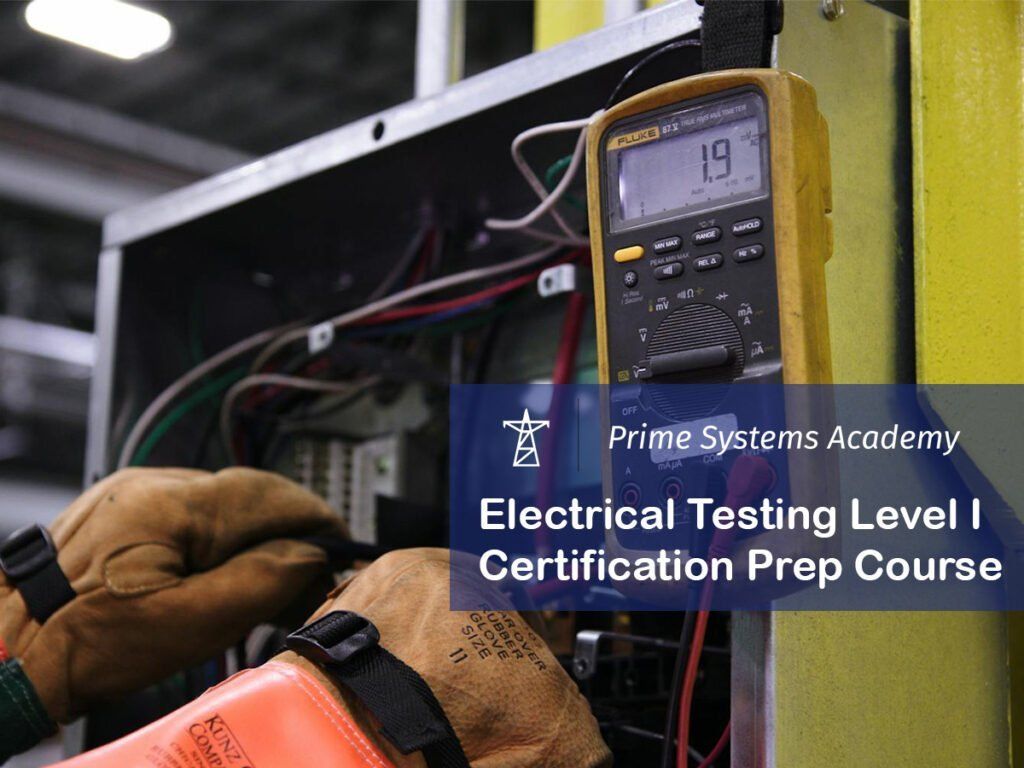
Electrical testing certification course advertisement

Course

[Unofficial]

NICET Electrical Testing Level I Test Prep

View the Course
Technician preparing for electrical testing certification course.

Course

[Unofficial]

NICET Electrical Testing Level II Test Prep

View the Course
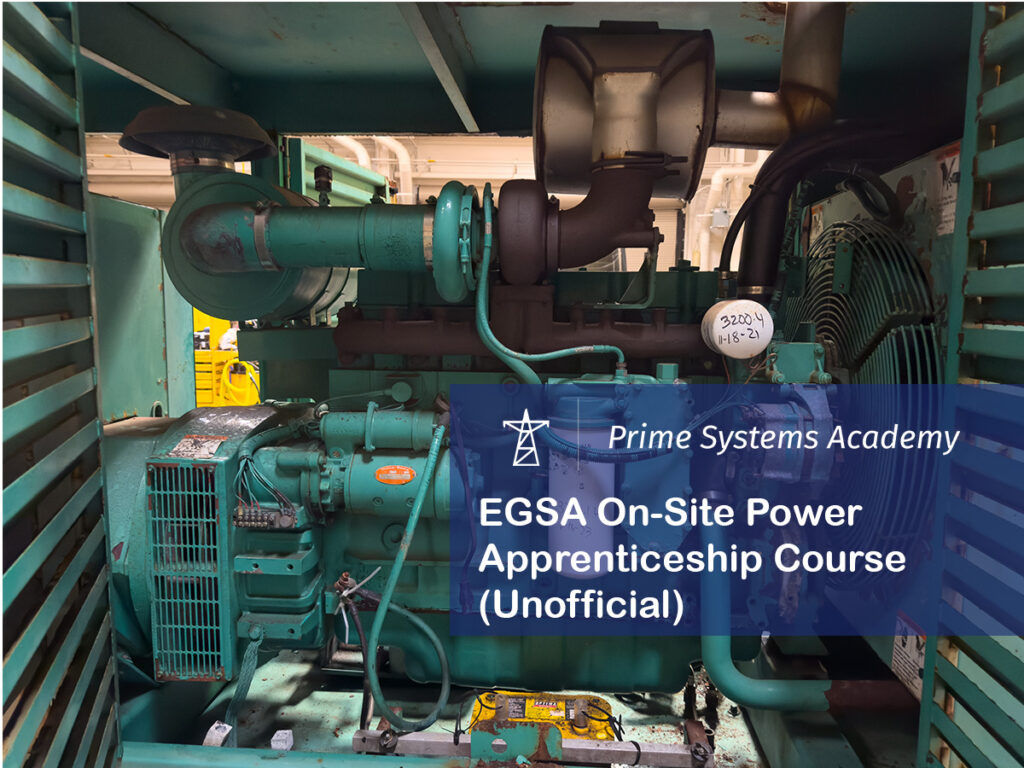
Power generation equipment at Prime Systems Academy course

Course

[Unofficial]

EGSA On-Site Power Apprenticeship Course

Coming 2026

Coming Soon
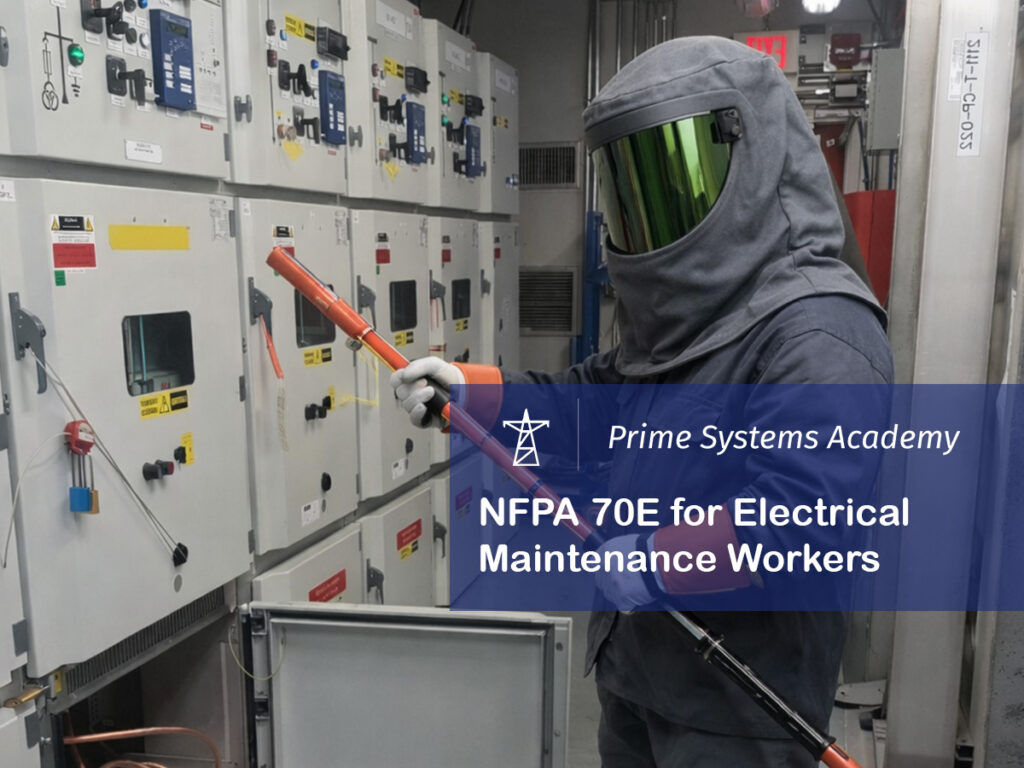
Technician in arc flash suit inspecting electrical panel

Course

[Unofficial]

NFPA 70E for Electrical Maintenance Workers

Coming 2026

Progress 0%

Coming Soon
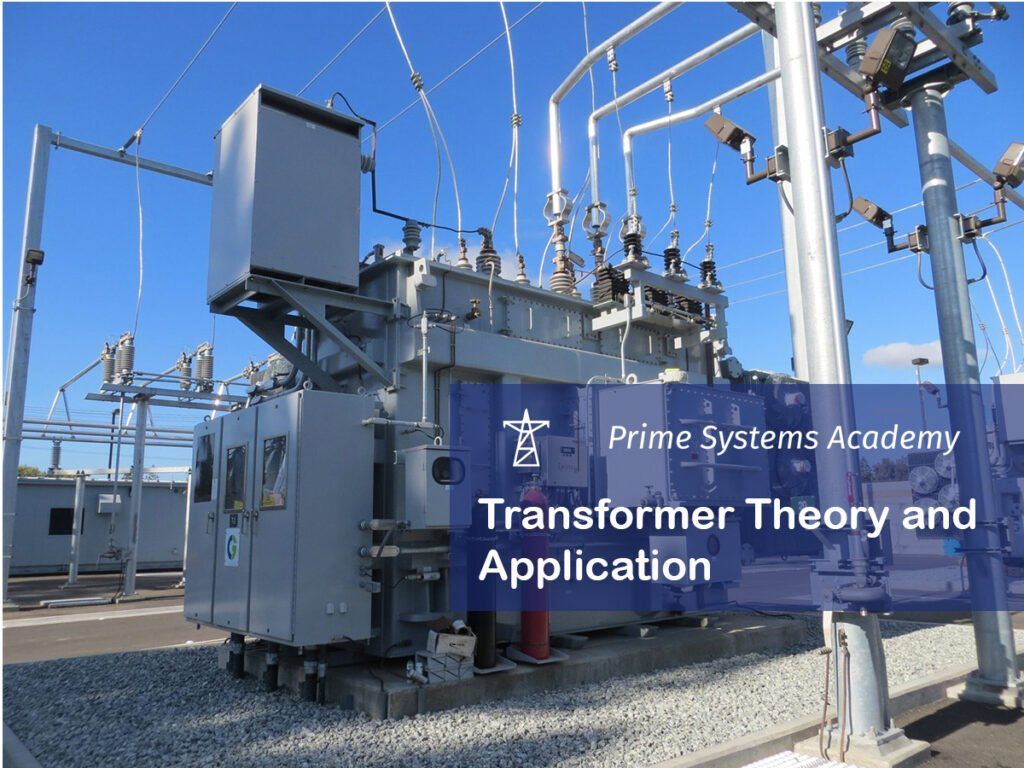
Electrical transformer with power lines.

Course

Transformer Theory and Application

Coming 2026

Coming Soon